Life · Music City
Band Night, and a Concert Hall Going Dark
How a room full of first-year band students reconnected me to the Schermerhorn, and what changed on Sunday
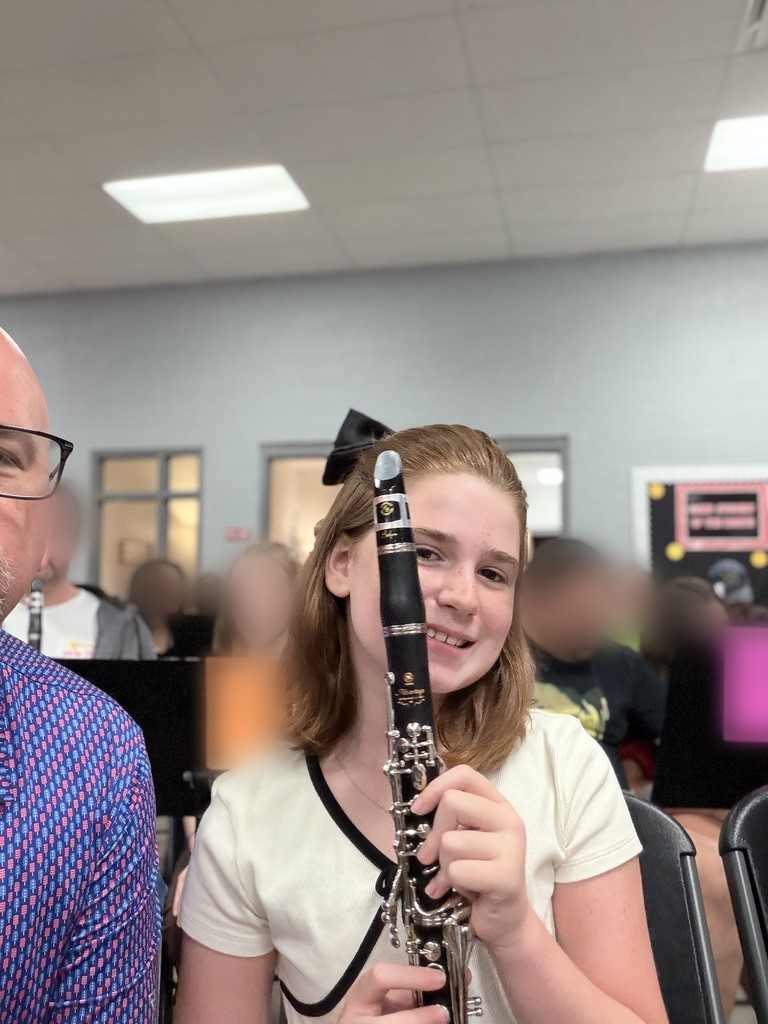
On Thursday night I sat in a folding chair in the band room at my daughter Claudia's school, next to her and her clarinet. This is her first year of band. She was assigned the clarinet, and she already holds it like it is hers.
Her band teacher runs these evenings on purpose. Parents do not just come to hear a performance. We sit in among the kids, in the folding chairs, and watch how they are being taught: how to count, how to breathe, how to come in together. At one point hands went up around the room and Claudia's went straight up with them, clarinet in the other fist. I took the picture because I knew I would want it.
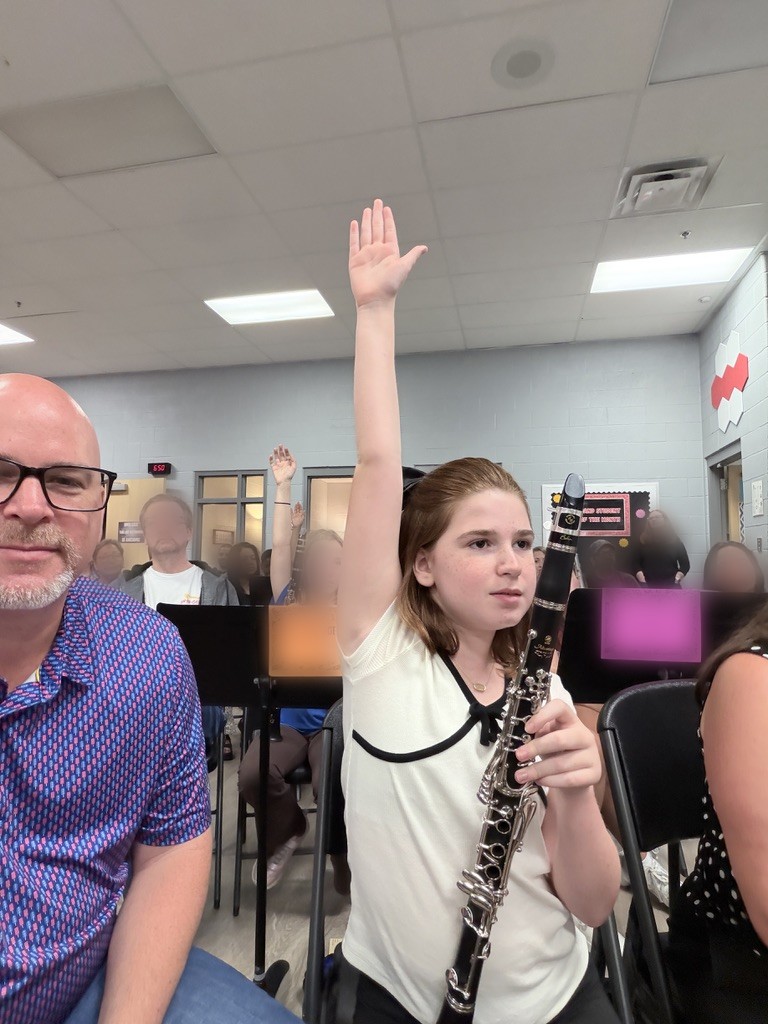
It was a small, ordinary evening, and I will keep it for the rest of my life. It also sent me home thinking about a building downtown.
The eighteenth of October
If you live in Nashville you already know. On 28 September the board of the Nashville Symphony voted to suspend the rest of its season. The orchestra plays its last scheduled concerts on 16 and 17 October. From the 18th, all 77 of its musicians and 27 of its staff are furloughed. The reporting puts the hole at ten million dollars in this year's budget, with the cash to keep going already gone.
The Schermerhorn Symphony Center, the hall the orchestra plays in, opened twenty years ago. For most of that time it has leaned on a small number of very generous people, and on one above all. Martha Ingram died in August at ninety. She helped get the hall built, and in 2013, when it was facing foreclosure, she is the one who stepped in. The announcement says as much, in gentler words: one donor's generosity carried the place, and that was never meant to stand in for everyone else.
I am not writing to assign blame. I am writing because I sat in that band room on Thursday and did the arithmetic of what those kids are being trained for.
That was the picture on Thursday night. It changed on Sunday, and I will get to that. But the arithmetic is the same either way.
Where two hundred clarinets go
A school band is not the three or five people you hear on the radio. It is a hundred and fifty, maybe two hundred children, each learning one voice in something much larger than any of them. Flutes, clarinets, trombones, percussion. It is a grown-up kind of music, and we hand it to children.
How many of them will still be playing it in college? How many after that? For most people the last time they stand inside that sound is high school. After that, the only place a city keeps it alive is a hall like the Schermerhorn.
Some people will say that hardly matters. Symphonic music is not on American Idol. It is not on The Masked Singer. But it is in nearly everything else. It is how a film tells you what a character feels before the actor says a word. I can still hear John Williams's Indiana Jones theme without trying. I can hear the game scores of Jack Wall and John Paesano the same way. This hall has put on whole concerts of Zelda and Final Fantasy music, for people who would not otherwise think of themselves as a symphony crowd.
This is Music City. On Thursday night I was reminded how much more than country music that name covers.
Our orchestra
Abby and I have history here, and it is older than the building. When we were in high school the Schermerhorn did not exist yet. The Nashville Symphony played in a different hall, students could get in free, and it made a fine cheap date. We were dating other people at the time.
Years later, in the new hall, we went together to a concert advertised as modern hits of the 90s. It turned out to be the 1890s. We did feel the bait and switch that night.
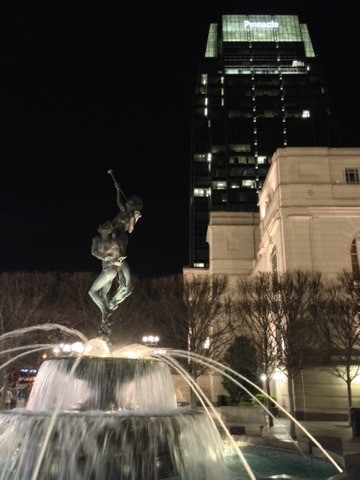
So the hall is not really the point. In both places, at both ages, the thing in the middle was the Nashville Symphony. The building is what makes the headlines. The orchestra is what I would miss.
The building has earned its place with us all the same. The fountain on the Fourth Avenue side, the one with the bronze figures, is where we take the pictures. It is called The Birth of Apollo.
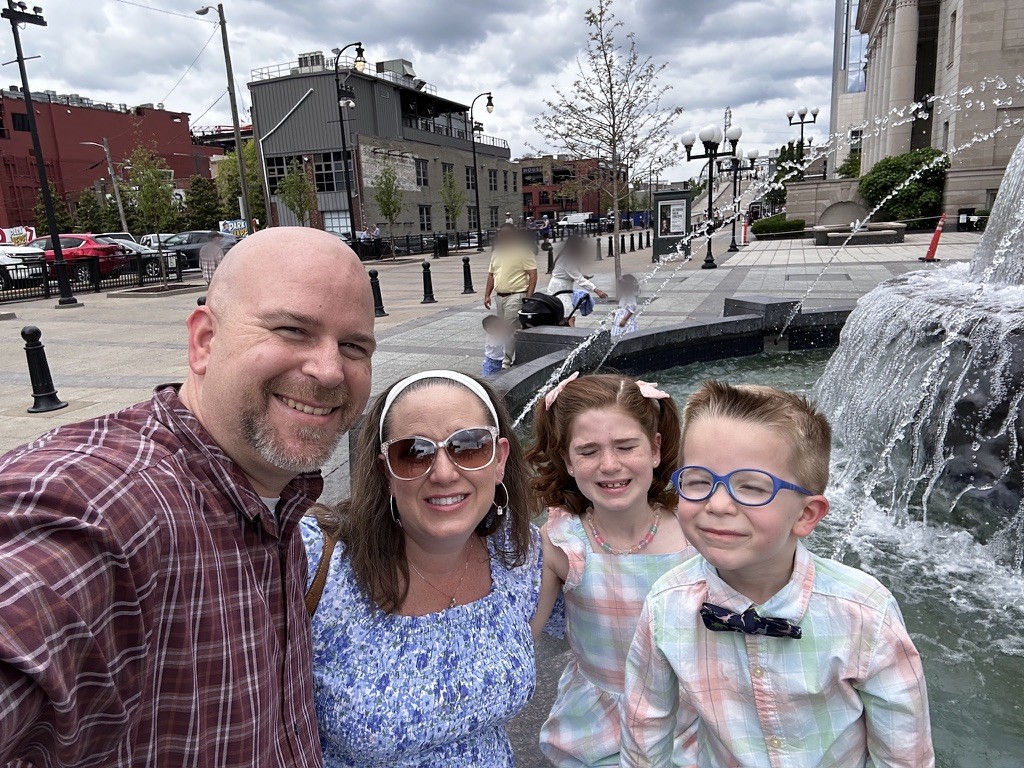
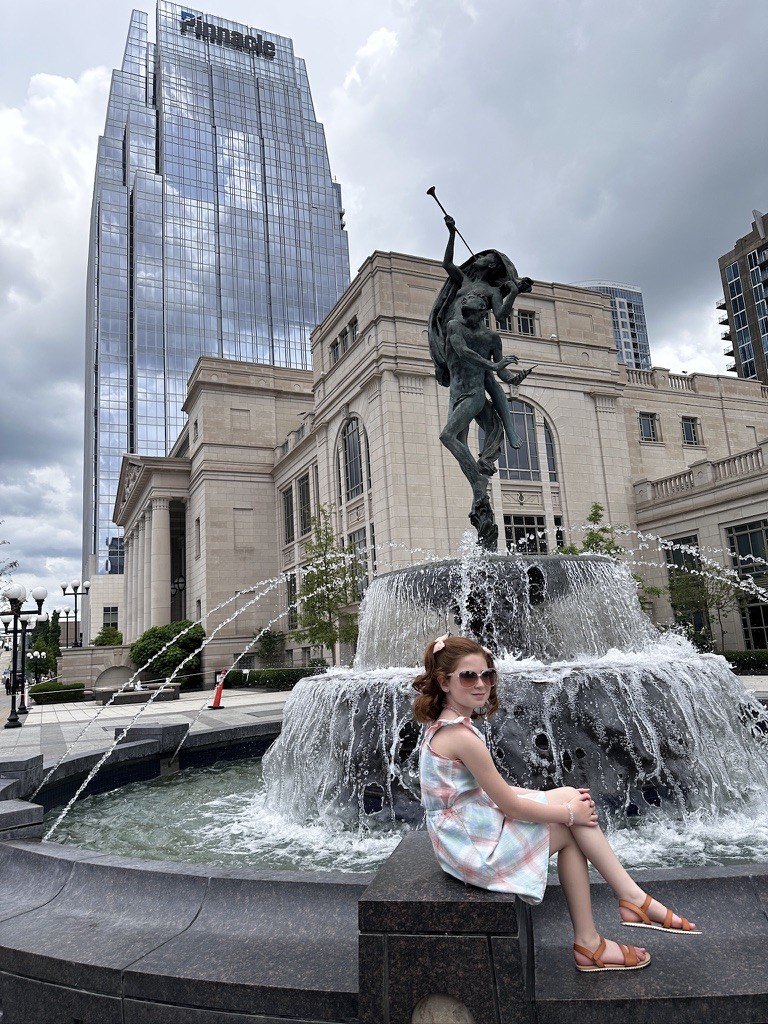
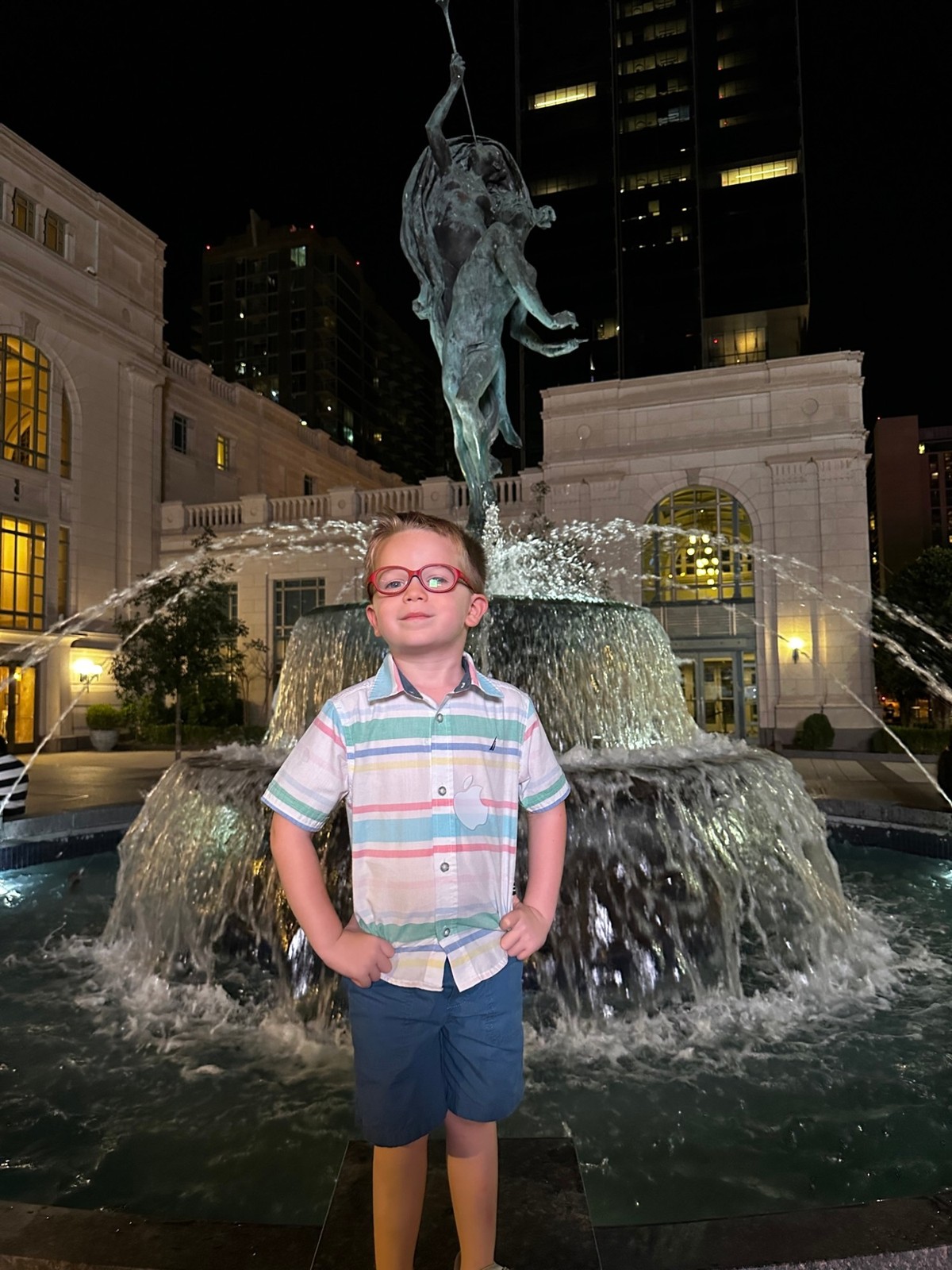
The same fountain, two kids, a day and a night.
What a night out costs
I do know what I hear from people like us. The crowd that would love a night of this music is the crowd that does not want to pay fifty dollars to park. It is the crowd that does not want to sit in traffic with no clear way in or out of downtown. A ticket can be twenty-five or fifty dollars, and the rest of the evening can cost several times that before a note is played.
It is also, I should say, the same crowd that first got in free as teenagers, the way Abby and I did. None of that is a reason to stay home. It is a reason to plan the night like it matters, because it does.
Sunday's news
On Sunday 4 October, three days after band night, the Nashville Symphony announced a ten million dollar partnership with Oracle, the company building its new headquarters on the East Bank. The season is back on. The furloughs that were due on 18 October, all 77 musicians and 27 staff, are cancelled, and the orchestra returns to the Schermerhorn.
Ten million dollars is, not by coincidence, the size of this year's hole. The symphony's new president and chief executive, Mark Tillinger, said the partnership gives it the ability to bring its musicians and its music back to the stage, and momentum toward a more sustainable future. His predecessor, a week earlier, had said the quiet part out loud: for years the institution had run on a financial foundation that could not sustain it.
So this is not a rescue. It is an extension. A company still building its headquarters here has bought the symphony a season to get its house in order, and it did so in the same week that the city learned what losing it would look like. I am glad of it, and I am grateful. I also notice that the orchestra went from one benefactor to one benefactor.
What an extension is for
Here is where my tone changes, because the question has changed. A week ago it was how do we fix this. Now it is how do we make sure this season is not the last one anybody has to buy.
Buy a ticket. The plainest thing on the list and the one that counts most, because an orchestra that sells its hall does not need rescuing. If you have never been, start with something you already love: the film scores, the game music, the holiday concerts. The symphony's own numbers will show whether the city showed up, and this is the year they will be looking.
Take the band kid. A school band like my daughter's is a hundred and fifty or two hundred children who have just learned what their instruments are for. Most of them have never heard a professional play one. The distance between the band room and the Schermerhorn is a short drive and a ticket, and closing it is how you grow the audience that will still be there in twenty years.
Give something, if you can. When the season was suspended, the symphony's donation page was the first thing it pointed people to, and the need did not go away on Sunday. A thousand households giving what they spend on parking for one night is not ten million dollars, but it is a different kind of money. It is the kind that does not depend on who moves to town next.
Say so out loud. Ingram money and Oracle money both arrived because someone made the case that this mattered to Nashville. The rest of us can make it too, cheaply, by treating a night at the symphony as a normal thing to do in this city and not an occasion.
This town's roots are in an art form that never needed much money to make, and the big money was never going to be the whole answer here. What keeps a hall open is the people who think of it as theirs.
I have a daughter with a clarinet, and for at least one more season there is somewhere in her city where she can go and hear what that instrument becomes when a full orchestra plays together and means it. I intend to take her.
Words by Will Mason. Photographs by the author; other people in them are blurred on purpose, and the school is not named. The facts about the Nashville Symphony are from its own statements and local reporting as of 4 October 2026.